Phillips Lecture Series
The Religious Studies Phillips Lecture was established in 1987 by the United Religious Ministry in honor of Dwight L. Phillips (1905-1973), a leading Charlotte developer and contractor in the construction and development of apartments, housing developments, and shopping centers in Charlotte, and military installations in North Carolina, South Carolina, and Georgia. Among other notable landmarks, Phillips built the Charlotte Merchandise Mart and Freedom Drive Shopping Center in Charlotte. Phillips was a native Charlottean who grew up on his father’s dairy farm in what became the Sharon neighborhood of the city.
Upcoming 2026-27 Lecture
Kate Ott, Ph.D.
“Designing Relationships: The Ethics of AI Companions”
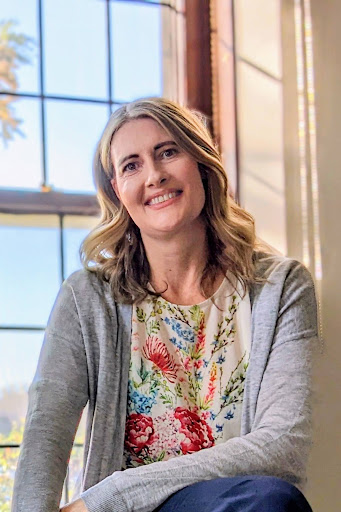
March 22, 2027
Atkins Library, Halton Reading Room
Talk followed by Q&A begins at 5:30 p.m. (60 min)
Light reception begins at 4:45 p.m.
Who and how will we be in a digital future integrated with AI companions from co-workers to educators, therapists to lovers? These partnerships promise to fix the analog problems that plague these relationships—less complicated, always available, complimentary, less expensive, customizable, and more. Relational generative AI models raise pressing ethical questions about the quality and values we want in healthy and flourishing relationships. While Christianity has historically offered an anemic response to the complexity of relational, and specifically sexual. ethics, we explore how a values-based approach can remedy historical wrongs and promote future flourishing with creative, morally grounded approaches to AI companion design and use.
Kate Ott, PhD is Jerre and Mary Joy Stead Professor of Christian Social Ethics at Garrett-Evangelical Theological Seminary in Evanston, IL and the Director of the Stead Center for Ethics and Values. To learn more, visit kateott.org.
Previous Phillips Lectures
2026-27 Lectures
Anthony Petro, Ph.D.
“Provoking Religion: Sex, Art, and the Aesthetics of Literalism”
October 20
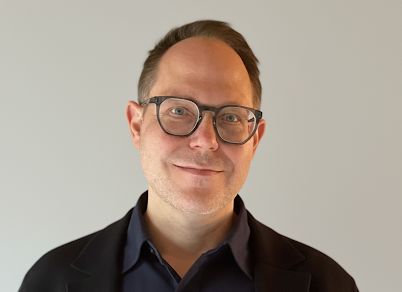
How should we read contemporary art dealing with religion, gender, and sexuality? During the U.S. culture wars of the 1980s and 1990s, conservative Christian leaders frequently attacked feminist and queer art that borrowed from Christian visual culture, labeling it blasphemous or pornographic. This talk examines this ideological clash through the 1990 legal battle between queer artist David Wojnarowicz and Methodist minister-turned-activist Donald Wildmon of the American Family Association, who had cropped and recontextualized Wojnarowicz’s imagery in an anti-NEA pamphlet. By analyzing their debate over sacrilege and censorship, this paper uses their court case to theorize an “aesthetics of literalism” driving the Christian Right’s approach to interpreting contemporary art.
Anthony Petro is Associate Professor of American Studies at the University of Notre Dame who specializes in U.S. Religious History.
Rachel Carbonara, Ph.D.
“The Making of Manifesting: Theories of Mental Magic in Modern America”
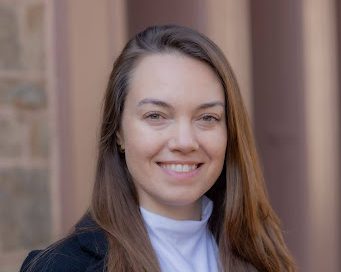
November 3
Tips and tricks for “manifesting” have become ubiquitous on social media platforms.
But what, exactly, is manifesting? Where did it come from? And why is it suddenly everywhere? This talk traces the history of the practice, and its shifting underlying theories of mental magic, from 19th-century America to the present.
Rachel Carbonara is a religious studies scholar and a Visiting Fellow at the Center for Culture, Society, and Religion at Princeton University.
2025-26 Lecture
Sylvester Johnson, Northwestern University, “Governing the Ethical Future of AI: Automation, Humanity, and Democracy”

2024-25 Lecture
David Walker, University of California, Santa Barbara, on “Mormon Wrestling: A Genealogy”

2023-24 Lecture
Gill Frank, Princeton University, “The Pastoral is Political: Religious Activism and Abortion Travel Before Roe v. Wade”

2018-19 Lecture
Rona Avissar, David Yellin Academic College of Education in Jerusalem, on “Family and Children in the Archaeology of the Hebrew Bible”
2013-14 Lecture
Gabriel Barkay, Bar Ilan University.